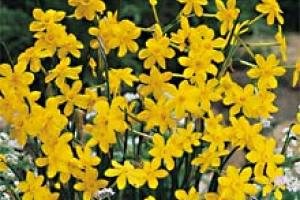
Buddleja davidii 'Bicolor'
Summer Lilac
Photo of Buddleja davidii 'Bicolor' - Summer Lilac
No photo for the moment for Buddleja davidii 'Bicolor' - Summer Lilac

Please note: You must be the owner of the posted photo and it must not be copyrighted.
Things You Must Knows cannot be held responsible for photos posted in violation of this rule
Common Name:
Foliage color:
GreenSun (From 0 to 5):
Water (From 0 to 5):
Maximum temperature:
Minimum temperature:
Maximum height:
Maximum width:
Summer Lilac (Buddleja davidii 'Bicolor') - Description
Buddleja davidii 'Bicolor' is the first Buddleja ever to offer two completely different colors on the same inflorescence! Fragrant, lavender and butterscotch yellow flowers blend together for a fascinating bicolor effect. The large conical panicles grow up to 10 inches long and display their beauty from mid summer until frost. Butterflies and hummingbirds love the sweet nectar of B. davidii 'Bicolor'!
Summer Lilac (Buddleja davidii 'Bicolor') - Blooming
Bloom times for Buddlejas vary from species to species. Blooms fragrant tubular flowers.
Summer Lilac (Buddleja davidii 'Bicolor') - Growth
Evergreen, semi-evergreen, and deciduous shrubs. Some are trees, climbers, and herbaceous perennials. Buddleja grows best in full sun with good ventilation. All species, except climbers, work well in a mixed or shrub border. In frost prone areas, raise Buddleja in a cool greenhouse that has a minimum temperature of 35°F (2°C).
Summer Lilac (Buddleja davidii 'Bicolor') - Planting
Sow seeds in spring at 66-75°F (19-24°C). Can propagate from semi-ripe cuttings in summer. Semi-ripe cuttings are cuttings taken from semi-mature wood.
Summer Lilac (Buddleja davidii 'Bicolor') - Pest
Butterfly Bushes are susceptible to aphid infestations and should be controlled. Control the infestation by either washing them off with a strong stream of water or by applying Neem oil. Many species attract butterflies.
Summer Lilac (Buddleja davidii 'Bicolor') - Interesting facts
As their common name suggests, Butterfly Bushes attract butterflies, but these plants are not limited to just butterflies. Buddlejas also attract bees, moths and hummingbirds. They are notable for their flower color and fragrance. The genus name itself has been a source of confusion. The famous Swedish taxonomist Carl Linnaeus accidentally spelled the genus as "Buddleja". In the common Latin practice used by taxonomists, it would be spelled as "Buddleia". Since Linnaeus never corrected his mistake, the genus is spelled with the letter "j" but is considered to be spelled correctly if spelled with the letter "i" as well.
Summer Lilac (Buddleja davidii 'Bicolor') - Soil and irrigation
Butterfly Bushes can generally tolerate many soil-types, but the soil must be well-drained soil. Water freely during the growing season, much less in winter.