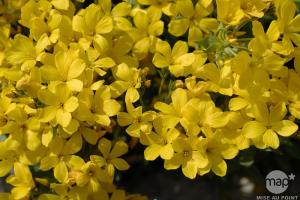
Ceanothus ovatus
Inland Ceanothus
Photo of Ceanothus ovatus - Inland Ceanothus
No photo for the moment for Ceanothus ovatus - Inland Ceanothus

Please note: You must be the owner of the posted photo and it must not be copyrighted.
Things You Must Knows cannot be held responsible for photos posted in violation of this rule
Common Name:
Flower color:
Foliage color:
GreenSun (From 0 to 5):
Water (From 0 to 5):
Maximum temperature:
Minimum temperature:
Maximum height:
Maximum width:
Inland Ceanothus (Ceanothus ovatus) - Description
This dense shrub is found from New England to the central United States. In the summertime, it has glossy green leaves and bright reed seed capsules.
Inland Ceanothus (Ceanothus ovatus) - Blooming
Typically Wild Lilacs bloom in the spring, but certain species may vary. The flowers range in color from white to all shades of blue.
Inland Ceanothus (Ceanothus ovatus) - Growth
Deciduous and evergreen shrubs. Some are small trees. Plants vary greatly in growth habits. Some grow low, prostrate and spreading, while others are compact and bushy. Grows best in full sun. Trained against a wall, Ceanothus can reach twice the height they would normally grow in an open site. Low growing, prostrate species, like C. americanus, grow well as groundcovers or in large rock gardens. In general, California Lilacs grow best in shrub borders or against sunny walls.
Inland Ceanothus (Ceanothus ovatus) - Planting
Sow seeds in a seedbed, or in containers in fall. Species will hybridize freely. Can also propagate from semi-ripe cuttings for evergreen species, and greenwood cuttings for deciduous species during the summer. Greenwood cuttings are taken from shoot-tips of plants, and are harder than softwood cuttings. Semi-ripe cuttings are cuttings taken from semi-mature wood.
Inland Ceanothus (Ceanothus ovatus) - Pest
Deer may be a problem, but Wild Lilacs with smaller leaves tend to be more resistant to herbivory by deer. Aphids and whiteflies can be a problem, but are easily controlled.
Inland Ceanothus (Ceanothus ovatus) - Interesting facts
The seeds of some Ceanothus can stay dormant for centuries until a forest fire triggers germination.
Inland Ceanothus (Ceanothus ovatus) - Soil and irrigation
Wild Lilacs require excellent drainage. These plants evolved growing on rocky slopes. Some species require total dryness during the summer months (especially the coastal ground-cover species), but others need rare summer watering. Prefers rich soil with good drainage. Lime tolerant, but can become chlorotic in shallow, alkaline soils.