Polygonatum odoratum 'Variegatum'
Solomon's Seal
Photo of Polygonatum odoratum 'Variegatum' - Solomon's Seal
No photo for the moment for Polygonatum odoratum 'Variegatum' - Solomon's Seal

Please note: You must be the owner of the posted photo and it must not be copyrighted.
Things You Must Knows cannot be held responsible for photos posted in violation of this rule
Common Name:
Plant Type:
Flower color:
Foliage color:
VariegatedSun (From 0 to 5):
Water (From 0 to 5):
Maximum temperature:
Minimum temperature:
Maximum height:
Maximum width:
Solomon's Seal (Polygonatum odoratum 'Variegatum') - Description
Polygonatum odoratum (angular Solomon's seal or scented Solomon's seal) syn. P. officinale, is a species of flowering plant in the family Asparagaceae, native to Europe, the Caucasus, Siberia and Japan. In the United Kingdom it is one of three native species of the genus, the others being P. multiflorum and P. verticillatum.
Solomon's Seal (Polygonatum odoratum 'Variegatum') - Blooming
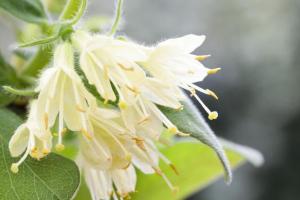
Small, pendent, bell-shaped or tubular white flowers, beneath the leaves either singly or in clusters followed by berry-like red or black fruits.
Solomon's Seal (Polygonatum odoratum 'Variegatum') - Growth
Handsome foliage. Rhizomatous perennials with unbranched, erect or arching stems that bear linear or ovate leaves. Foliage often featherlike. Grows best in full or partial shade. Polygonatum works well in woodland gardens, mixed or herbaceous borders, or rock gardens in shady sites.
Solomon's Seal (Polygonatum odoratum 'Variegatum') - Planting
Divide rhizomes in spring. Can also propagate from the seed in fall by sowing in containers in a cold frame (for protection and to ensure hardiness).
Solomon's Seal (Polygonatum odoratum 'Variegatum') - Pest
Slugs and sawfly larvae.
Solomon's Seal (Polygonatum odoratum 'Variegatum') - Interesting facts
Polygonatum is native to the woodlands of temperate Eurasia and North America regions. All part of Polygonatum can cause stomach upset if consumed, although some shoots and roots, when properly prepared, are edible.
Solomon's Seal (Polygonatum odoratum 'Variegatum') - Soil and irrigation
Rich, moist, well-drained soil that is kept moist. Most tolerate dry soil.