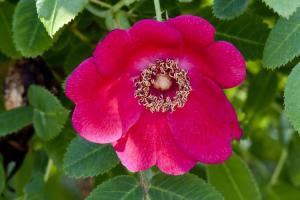
Rudbeckia hirta 'Sonora'
Black-Eyed Susan
Photo of Rudbeckia hirta 'Sonora' - Black-Eyed Susan
No photo for the moment for Rudbeckia hirta 'Sonora' - Black-Eyed Susan

Please note: You must be the owner of the posted photo and it must not be copyrighted.
Things You Must Knows cannot be held responsible for photos posted in violation of this rule
Common Name:
Plant Type:
Sun (From 0 to 5):
Water (From 0 to 5):
Maximum temperature:
Minimum temperature:
Maximum height:
Maximum width:
Black-Eyed Susan (Rudbeckia hirta 'Sonora') - Description
Radiant gold, 5-6in. flowers, with an inside ring of mahogany around dark centers, grow on compact plants from early summer until frost. Annual. Ht.18in. GARDEN HINTS: In mild climates, sow seeds outdoors 1/4in deep any time of the year.
Black-Eyed Susan (Rudbeckia hirta 'Sonora') - Blooming
Blooms daisy-like flowerheads with conical centers between summer and fall. The florets are often reflexed, and mainly exhibit shades of yellow and orange-red.
Black-Eyed Susan (Rudbeckia hirta 'Sonora') - Growth
Annuals, biennials, and perennials. Rudbeckias do well in full sun or partial shade. The flowers of most species of Rudbeckia are suitable for cutting. Rudbeckia also works well in a border, or naturalized into a meadow or woodland garden. R. hirta is particularly nice as an annual for bedding or borders.
Black-Eyed Susan (Rudbeckia hirta 'Sonora') - Planting
Sow perennial seeds in containers in a cold frame in fall or spring. Divide perennials in fall or spring. Sow annual and biennial seeds at 61-64°F (16-18°C) in spring.
Black-Eyed Susan (Rudbeckia hirta 'Sonora') - Pest
Slugs and snails are a threat to young growth. Rudbeckia is also prone to aphids, powdery mildew, leaf spots, rust, and smut.
Black-Eyed Susan (Rudbeckia hirta 'Sonora') - Interesting facts
Rudbeckia is native to North America. There are 20 known species. They are called coneflowers, because of their conical centers that can be black, brown, or green.
Black-Eyed Susan (Rudbeckia hirta 'Sonora') - Soil and irrigation
Rudbeckias prefer moderately rich, heavy, well-drained soils that do not dry out. R. fulgida var. deamii tolerates dry conditions the best compared to other species.