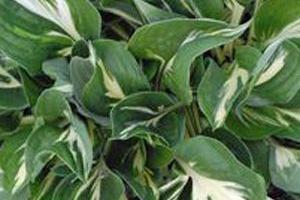
Kalanchoe beharensis
Elephant's Ear Kalanchoe
Photo of Kalanchoe beharensis - Elephant's Ear Kalanchoe
No photo for the moment for Kalanchoe beharensis - Elephant's Ear Kalanchoe

Please note: You must be the owner of the posted photo and it must not be copyrighted.
Things You Must Knows cannot be held responsible for photos posted in violation of this rule
Common Name:
Flower color:
Foliage color:
GreenSun (From 0 to 5):
Water (From 0 to 5):
Maximum temperature:
Minimum temperature:
Elephant's Ear Kalanchoe (Kalanchoe beharensis) - Description
Kalanchoe beharensis (commonly known as elephant's ear kalanchoe, felt bush, or feltbush) is a plant species in the succulent genus Kalanchoe, and the family Crassulaceae, a morphologically diverse and systematically complex angiosperm family […], characteristically leaf-succulent, usually herbaceous, and often [with] five-parted, radially symmetrical flowers with two whorls of five stamens each. The family inhabits primarily semiarid habitats and is nearly cosmopolitan in distribution, with centers of diversity in Mexico, southern Africa, Macaronesia, and the Himalayas. Kalanchoe beharensis is native to Madagascar.
Elephant's Ear Kalanchoe (Kalanchoe beharensis) - Blooming
Flowers are borne in cymes-like or corymb-like panicles.
Elephant's Ear Kalanchoe (Kalanchoe beharensis) - Growth
Plant height varies depending on the species. Kalanchoes are generally grown as potted, indoor plants, but can be grown outdoors in climates that have mild winters. Grows best in partial shade.
Elephant's Ear Kalanchoe (Kalanchoe beharensis) - Planting
The Maternity Plant (K. daigremontiana) is especially easy to propagate. Another common name is Mother of Thousands. This is because plantlets form at the margins of the leaves. These plantlets can easily drop off and quickly propagate themselves.
Elephant's Ear Kalanchoe (Kalanchoe beharensis) - Pest
Slugs and snails can cause permanent leaf damage. Mealybugs and aphids are also a problem. Other issues include powdery mildew, bacterial soft rot, fasciation, virus disease, crown rot, root rot, and leaf spots.
Elephant's Ear Kalanchoe (Kalanchoe beharensis) - Interesting facts
Kalanchoe is endemic to the shady and partially desert regions of Saudi Arabia, Yemen, South and Central Africa, Madagascar, Australia and Asia. It is also found in tropical America. Although most Kalanchoe flower, there is at least one species which rarely flowers and does not reproduce through seeds. Instead Mother of Thousands drops many tiny plantlets from the edges of its leaves.
Elephant's Ear Kalanchoe (Kalanchoe beharensis) - Soil and irrigation
Kalanchoe does well in well-draining soil that is humus-rich and medium fertile.