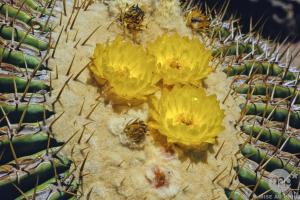
Cylindropuntia imbricata
Cane Cholla
Photo of Cylindropuntia imbricata - Cane Cholla
No photo for the moment for Cylindropuntia imbricata - Cane Cholla

Please note: You must be the owner of the posted photo and it must not be copyrighted.
Things You Must Knows cannot be held responsible for photos posted in violation of this rule
Common Name:
Flower color:
Sun (From 0 to 5):
Water (From 0 to 5):
Maximum temperature:
Minimum temperature:
Cane Cholla (Cylindropuntia imbricata) - Description
The cane cholla (or walking stick cholla, tree cholla, chainlink cactus, etc.) (Cylindropuntia imbricata) is a cactus found in the Southwestern United States and northern Mexico, including some cooler regions in comparison to many other cacti. It occurs primarily in arid regions but can also be found scattered across locations in the semi-arid High Plains of the Texas Panhandle and eastern New Mexico. It is often conspicuous because of its shrubby or even tree-like size, its silhouette, and its long-lasting yellowish fruits.
Cane Cholla (Cylindropuntia imbricata) - Growth
These cacti are very tolerant of drought and heat.
Cane Cholla (Cylindropuntia imbricata) - Planting
Soak the seeds in water for a minimum of one day. Sow the seeds at 70F in spring. Separate young plants from each other. IMPORTANT: The spines of these cacti are rather sharp. Use a newspaper to handle the plants. Be sure to discard the used newspapers after use.
Cane Cholla (Cylindropuntia imbricata) - Pest
Prone to rots that are generally associated with improper watering techniques. Also prone to mealybugs and scale.
Cane Cholla (Cylindropuntia imbricata) - Interesting facts
The genus name Cylindropuntia is a combination between the word cylinder and the genus name Opuntia. The succulent stems of the cacti are cylindrical in shape and the members of the genus are closely related to those of Opuntia, hence the name.
Cane Cholla (Cylindropuntia imbricata) - Soil and irrigation
As most cacti, these plants do best with well-drained soils. The soil should also be moderately fertile with a good amount of humus. Provide water from early spring to the middle of fall and allow for the soil to thoroughly dry out in between waterings.