Tilia henryana
Lime Trees
Photo of Tilia henryana - Lime Trees
No photo for the moment for Tilia henryana - Lime Trees

Please note: You must be the owner of the posted photo and it must not be copyrighted.
Things You Must Knows cannot be held responsible for photos posted in violation of this rule
Common Name:
Sun (From 0 to 5):
Water (From 0 to 5):
Maximum temperature:
Minimum temperature:
Lime Trees (Tilia henryana) - Description
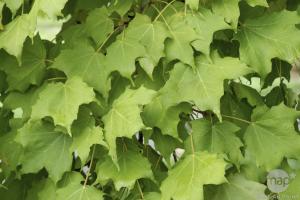
Tilia henryana Szyszyl. , commonly known as Henry's Lime, was introduced to the West from China by Ernest Wilson in 1901. The tree is native to the provinces of Anhui, Henan, Hubei, Hunan, Jiangsu, Jiangxi, Shaanxi, and Zhejiang, and was named for the Irish plantsman and sinologist Augustine Henry, who discovered it in 1888.
Lime Trees (Tilia henryana) - Blooming
Blooms small, cup-shaped fragrant creamy white to yellow flowers followed by dry, nut-like fruits. Attracts bees.
Lime Trees (Tilia henryana) - Growth
Deciduous trees. Lindens do well in full sun with protection from strong winds and extreme dryness. Height varies depending on variety. Some species will grow to 60 ft. tall. Tilia works well as stand alone or street-side trees.
Lime Trees (Tilia henryana) - Planting
Seeds collected from the garden may produce hybrids. Sow seeds when ripe in fall in a seedbed. Can also propagate by stratifying seeds for 3-5 months and sowing in spring in containers in a cold frame (for protection and to ensure hardiness).
Lime Trees (Tilia henryana) - Pest
Caterpillars, lace bugs, aphids, mites, and Japanese beetles. Other issues include butt rot, powdery mildew, bacterial leaf spot, and anthracnose.
Lime Trees (Tilia henryana) - Interesting facts
Tilia is endemic to the woodlands of Europe, Asia, and North America. The nectar of T. tomentosa and T. 'Petiolaris' is toxic, even to bumblebees.
Lime Trees (Tilia henryana) - Soil and irrigation
Lindens require deep, rich soil with regular waterings, with the exception of T. tomentosa which needs no dry-season water once it is established. Does best in alkaline to neutral soil, but tolerates acidic pHs.